
THE RIGGIN’ SLINGER (READ ONLY)
45 YEARS AGO JOHN LENNON WAS MURDERED & I WAS A LOGGER

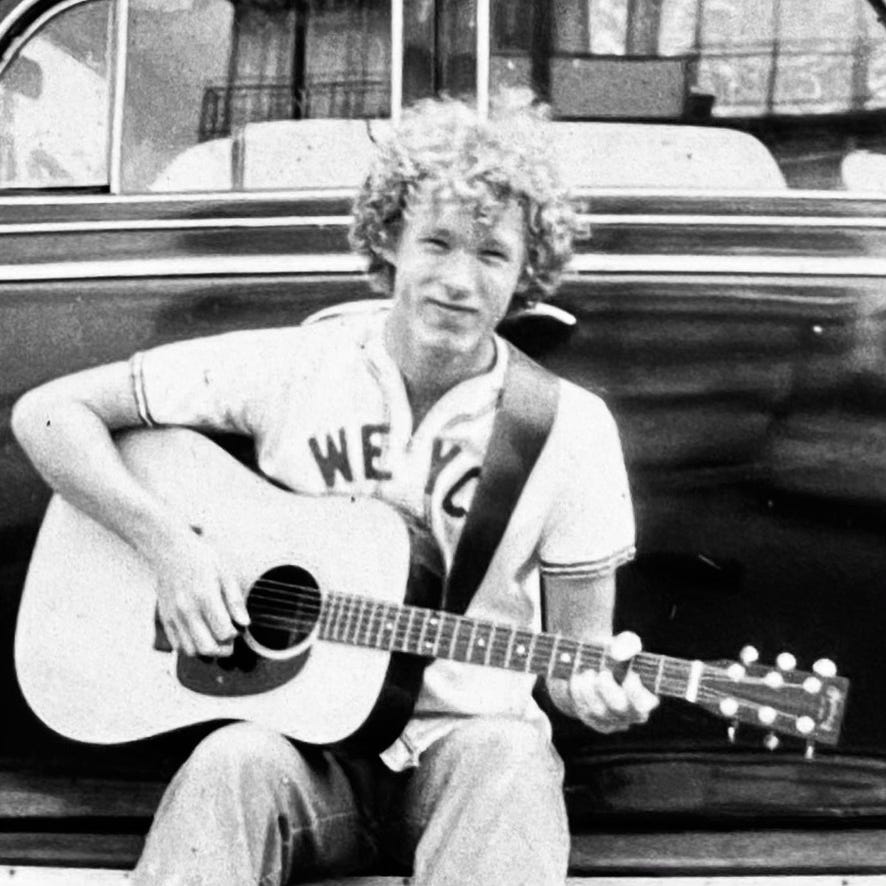
WARNING: THIS ARTICLE CONTAINS SOME VULGAR LANGUAGE
This story comes from my book:
ALMOST FAMOUS IN ALBERTA & OTHER TRUE STORIES
About thirty miles west, down the fjord-like inlet from Port Alberni, on Vancouver Island, was a logging camp run by MacMillan Bloedel Ltd. When I was seventeen, I heard that I could make a stack of money being a logger. I hitchhiked out to the camp and applied for a job, which I got. I had one of the most dangerous jobs in the bush. I was a chokerman. The name “choker” comes from the heavy duty slip-knot cables loggers wrapped around the logs so they could drag them out of the bush with heavy machinery. Because of the dangerous nature of this job, I now had a life insurance rating ten times higher than that of an inner-city fireman. There seemed to be more than a little risk in this job, and I was well aware of it. I was pretty quick on my feet; I had a natural thirst for my own survival and the reflexes of a cat because I was scared shitless. On my first day, just before lunch, the logging machine operator decided to try and frighten me. He dropped the two-ton rigging and three-inch steel cable running above our heads from about fifty feet in the air, straight down to the ground about ten feet away from me just to see if I was paying attention. But mostly to see if he could scare the new guy. While he was laughing at his successful effort, I decided to take the rest of the day off after walking up hill to his machine and giving him the proper one-finger salute, along with a few choice new names I had come up with just for him. I didn’t feel safe around a guy like him and rightly so. There have been plenty of guys who died in situations like that, and I didn’t want to join them on Boot Hill. I grabbed my lunch box, wandered down to the gravel road, and stuck my thumb out hoping for a ride. The only problem was there wasn’t anyone on that road. It was literally in the middle of nowhere. There was nobody except a large black bear that was walking in my direction. It saw me and looked interested. It was getting closer and closer, and I began to walk away from it slowly. I opened my lunch box and threw my wax paper-wrapped lunch on the ground as an offering. Maybe my peanut butter sandwiches would distract him for a while. Luckily before too long, a passing logging truck driver summed up the situation and decided to give me a ride. The bear scampered into the woods. I didn’t show up on the job the next day. That was enough of that guy and enough of logging, for a while anyway.
A year or two later when I was done gigging with the Honky Tonk Heroes and after my road gigs as a guitarist for hire, I grew disillusioned with the hard life that came with it. Playing for drunks in crappy bars and rodeos failed to grow on me. It didn’t seem to be leading anywhere, so I quit for the first of many times.
Eventually, on a quest for some good earnings, I thought I’d give logging another shot. I caught a ride up to northern Vancouver Island with my brother-in-law. He was a real logger. Myron, is married to my sister Liz. His folks were from the Ukraine. He’s easy going with a great smile, but you could never out-work him. It would be impossible. He had worked for many years as a faller, the one who cuts down the big timber. It’s the highest rung on the logging ladder and the most dangerous too. The fallers are like royalty in logging circles, where nobody gets treated like royalty. At this particular time, he was unemployed because the company he worked for had laid his crew off. He’d worked for a few “gypo” companies (small renegade private operations) before he landed the falling job with Macmillan Bloedel, or Mac & Blo for short. Even though he’d lost his Mac & Blo job, he and Liz were planning a family, so he had to find a new one quickly. We decided to drive together, a couple hours north to the CANFOR (Canadian Forest Products) logging camp and a place called Woss Lake. Once we got there, we went to the main office and asked for job applications and started filling them out. The guy behind the counter seemed somewhat positive and said they might be hiring, probably because of Myron’s resume. Once we filled out our forms, we wandered down by the river. We were walking around and killing time while they inspected our applications. They told us it would be about an hour. This was an incredibly beautiful place. A raging creek cut the valley in two. This logging camp had its own railroad running right through the middle of it. They owned the logging rights to an enormous tract of land right in the middle of the northern part of Vancouver Island. Their domain was so large that they needed a railroad to move the logs, to be sold and shipped.
After an hour of walking around, it was time to head back up to the office. We started up the hill from the little river, and I walked right into the point of a very long branch hanging down from above, out of my view. I started bleeding profusely from the head. It’s never considered good form to be bleeding during your job interview, but they hired me anyway. Thus began my second stint as a logger. Woss Lake was a pretty good organization. They took good care of their workers and gave us nice clean rooms. Each comfy, private bunkhouse room was maintained by an old guy known as a “flunkie.” Guys with names like Lou and Plug. Plug’s claim to fame was that the only time he’d ever been off of Vancouver Island in his entire life was the time he fell off the Royston dock. These guys were too old to strap on the boots and work on a mountainside so they cleaned the cabins instead. They were good natured men, and we were grateful to have our rooms cleaned every day. They were characters in a place full of characters, like roustabouts from a carnival.
Back in those days, loggers had a strong union that had negotiated a good deal with the logging companies. They had to provide room and board, which consisted of three square meals a day and our own rooms at a cost of only $2.50 a day. It was an eighty-year-old union clause that couldn’t be broken. Such a small amount for lodging was obviously incentive to keep us in camp, without moving to an actual town. This place was in the middle of nowhere, and there was absolutely nowhere to go except the small coffee shop and store by the main office, where I learned quickly that not everyone who chooses logging as a profession is well-versed in the finest manners. In fact, their ranks included a rather loutish bunch of coffee shop trolls. The niceties of modern society were unimportant to them. These guys were kind of like the lifers at the pulp mill. They had one funny gag they did whenever someone came into the cafe wearing a cowboy hat. They’d all whistle the beginning of the theme from The Good, The Bad and the Ugly in unison, but just the first phrase of it. It was usually followed by a round of laughter aimed at the unsuspecting hat wearer. There were a few who were meaner in nature and loved to mock everyone that came into the cafe. Then they’d cackle at their own cruel jokes and a few of the bad eggs had seniority on the job and ran roughshod over everyone else. Guys with oddball nicknames like Ducky or Sharkey. Foremen of their own crews, they fancied themselves the finest loggers in the woods when, in fact, they were kind of old and out of shape. The young, lean crew I was on put them all to shame in terms of daily production numbers, which didn’t improve their attitudes toward us. They were frequently hungover jerks with foul mouths. They loved to be bossy and make the younger guys miserable.
Tolerating their brand of verbal abuse and insults had grown tiresome quickly. I had a chip on my shoulder. I wasn’t a kid anymore, and I wasn’t about to take any crap from anyone. Even so, I was harassed mercilessly by Ducky for the first few weeks of my job. It was bad enough being in the middle of nowhere in a society without women and feeling cut off from the music world I dreamt of being a part of. I felt trapped and isolated. I didn’t want to be bugged by anyone, so I was determined to get even with the notorious Ducky. The next weekend I went to the big city, I bought myself a hunter’s duck call. When I got back to camp, every time Ducky came anywhere near me, I’d let out a good quack or two to just put him in his place. I could make the sound of a duck laughing with the hunter’s helper I’d bought, and I made sure he heard it every day. I was treated to the sight of his sneering, toothless, grimace frothing cuss words from afar. He never bugged me again.
My direct supervisor was a guy named John Shaw. On our crew, he was the Riggin’ Slinger. A Riggin’ Slinger is an experienced logger with a radio signal device strapped to his belt that activates the air whistle on top of the main logging machine, and with it, all of the actions of its operator. John was a good, solid 180 pounds and about 5’10” tall. He was as tough as anyone I’d ever met. Probably tougher. He was fair and treated me with respect and did the same with our other crewman, a guy he called the Swede Whoore. Whoore is the semi-comical Canadian mispronunciation of the term used to refer to ladies of the night but with no malice intended toward them specifically. It is sometimes spoken that way with humor and affection, if you can believe that. Some Canadians will have an inkling of what I mean but maybe no one else will. It’s all in the translation. There, in the middle of a vast wilderness at our remote work camp, every day started the same. After a huge hot breakfast (as much as you could eat), we’d move over to the lunch bar where they had everything we needed to fill our lunch kit. We’d make sandwiches, wrap them in waxed paper, gather pastries, and fill our thermos full of tea or coffee. Then the different crews would gather in a place known as the marshaling yard. There were men with names like Spar, Slim, or Stump based on the general description of their physique. The funnier you looked, the more likely you were to have a nickname. Each day, just before our crew would climb into a vehicle known as a crummy, John Shaw would say the same short phrase, “It’ll be long and it’ll be hard, but there’ll be no withdrawal.” Only then, had our day truly begun. A crummy was a Chevrolet Suburban 4-wheel drive that could carry six men from the camp to the job site. They were called crummies because of their worn out condition, their rough ride over the logging roads, and their filthy conditions inside and out. They were so dusty on the outside you couldn’t tell what color they were, and the inside was littered with cigarette butts, orange peels, and stinky old lunch bags. I don’t think they ever got cleaned.
After a while we began to feel more like John Shaw’s buddies than his work crew. He was the one who bestowed the nickname of Swede Whoore to Chris Carlson, the Swede. For quite a while, we busted out laughing nearly every time he called him that. Kind-hearted and good-natured Chris laughed along with us, seemingly okay with his semi-affectionate nickname. We’d go over to John’s place every once in a while and drink beer with him and watch TV. To a guy far from home, John’s welcome meant a lot to me. He also played guitar, and we would jam together. I think it made us both feel good to have another guitar player around. I showed him some of my guitar tricks and played him my songs.
John collected funny phrases that he’d store away for special moments when there wasn’t anything else going on. He had a sharp mind and a knack for being wry and witty during work. The work conditions were often bad enough that no one should have been able to find humor at all. When I first arrived, he thought I was too skinny. He said, “You look like a burlap bag full of antlers.” I’d never heard that phrase before, and it completely cracked me up. He said, “Don’t worry about Ducky. He’s a cull.” Cull is the word used for worthless logs that are rotten and, therefore, unusable and discarded. Everyone who annoyed John was a cull. He said as long as you’re not “talking when you should be listening,” you won’t get a “one-way ticket to Fat-lip, Indiana.” Anything small and indescribable, like a small bit of sawdust in your eye, or a bit of food stuck in your teeth was called a Nimberling. He’d spend a lot of effort setting up a gag so you’d be forced to get the punchline out of him, thereby unwittingly acting as his straight man. His favorite little gag always involved “the second worse thing that can happen.” He’d be telling a story and somehow he’d fit the phrase, “that’s the second worst thing that can happen,” into the conversation. To which someone in his audience, usually me, or the Swede Whoore would then ask, “Whats the worst thing that could happen?” Then he’d say, “Shit and fall back in it.” Then he’d start laughing at you for falling into his trap, and you’d end up laughing because it was all so stupid. The fact that we could find anything comedic at all was somehow uplifting at a time we were all working so hard. He had a long list of special words, humorous side-tracks and long-con, laugh-seeking gambits, and I appreciated them all.
Logging-camp goon Ducky wasn’t the only guy who’d gotten under my skin. There was another guy who took it upon himself to try and bum me out whenever he had the chance. This guy got mad because I was seated next to his girlfriend at the Christmas dinner. It wasn’t my fault; she sat next to me. She was friendly and pretty. I hadn’t seen a woman in months. We must have talked a good ten minutes before I even saw the bruiser on the other side of her. After that he hated me. John knew this redneck guy and told me later, “Don’t let him bug you, but don’t fight him. He’s strong. He’s got muscles in his shit.” John dismissed him as “strong like bull, smart like tractor.” He said the guy was lazy too. When John worked with him he had to “line him up with a stick just to see if he was moving.” He called him Johnny Rotten-tooth.
On December 8th, 1980, we were all at John’s watching TV with the sound off, sitting “side-by-each” as he’d say, playing guitars and drinking Lucky Lager beer. That night John Lennon of The Beatles was murdered. I was devastated when the news bulletin flashed on the TV screen. John Shaw’s redneck buddy just had to open his big yap. He was talking when he should have been listening. He said, “Serves him right, the fuckin’ hippy.” I didn’t want to be around people like him any more. There were guys working these hard-scrabble jobs who knew better than to say stupid things, but just couldn’t stop themselves. Some of them were inclined to sudden fits of violence and were too big in size to confront, so I had to pick my battles carefully. I’d grown tired of them. There were too many of them, and they were too willing to be ignorant.
Speaking of ignorant, our logging machine operator was the senior crew member and drove the crummy. He drove way too fast over the pot-hole-riddled, dusty gravel roads for about an hour each way to and from the job site. John thought the guy was a cull too. It may have been because he constantly bragged about how much money he had. He wasn’t a handsome man either. John said he was so ugly, “he’d make a freight train take a dirt road.” The guy also loved to urinate in front of other men because he was big downstairs. In his twisted world, even urinating was a form of bragging. The guy would smoke cigarettes and boast wildly the whole time he was driving. He once told us a tall tale about shooting a deer that was standing up on a cliff and, amazingly, the deer fell right into the bed of his pickup truck. John didn’t like the guy and privately said, “He’s a cull. He’d screw up a church picnic. He oughta be shot and pissed on.” Long rides on bumpy gravel roads in a dirty crummy full of surly, cigarette smoking, hung-over loggers was how each work day started and ended. The only silver lining was I got paid for every minute of it.
Out on the job site, John was a wizard of a logger. He’d use his radio whistle to send commands to the machine operator who was often as many as a hundred and fifty meters away. The logging machine was attached to a tall steel tower that was held steady by four huge cables wrapped around four big tree stumps. The logging tower supported the overhead yarding cables and pulleys. John would use a series of whistles to signal when to stop and lower the rigging to within fifty feet of where we were standing. Once the rigging lay still on the ground, we’d skip over the slippery, wet logs in our steel-toed, spike-bottomed cork boots, which made it almost impossible to slip. We’d connect the choker cables around the logs and then “skip like little deers” as John would say, “quick like a bunny” to get to safe ground. Then John would signal the machine operator with another series of whistles to pull the logs up off the ground so they could be dragged into the landing. Another crew would unhook the chokers and the logs would be put onto trucks with a loader that was like a giant claw.
Even though the machine operator had the most seniority and made more money, John Shaw the Riggin’ Slinger was always the boss of the crew. Our very lives depended on his good judgement. Blow the whistle too soon or too late, and someone could be killed by a swinging log or a large cable. Many young loggers have died doing this job, and the logging companies make no secret about it. They scare the crap out of anyone wanting this job up front so they get it into their head they could die. A bad call from a sub-par Riggin’ Slinger could be the cause of it. We didn’t have to worry about such a fate. I’m convinced there’s never been a better Riggin’ Slinger than John Shaw. I learned a lot about strength and perseverance from him. He was a great example. If he was phased by any of the dangers, he never let on. He was focused and clearly the one we took orders from. He was always calm, cool, and collected. Honestly, sometimes I was sick of the work and the constant rain and acted like a jerk because of it all. I was a smart-ass with a chip on my shoulder. I know I pissed him off every once in a while, but he never said an unkind word. I didn’t mind taking orders from a guy like John. It was always hard work, but he was a natural leader. I went home dog-tired and soaked to the bone from rain and sweat every day. I’d have to put my boots, gloves, and clothes over the heater every night to dry them out only to get them soaked again after the first fifteen minutes of the next shift. John looked out for us in other ways too, like always reminding us to lock our cars and bunkhouse rooms. There were bad folks around camp too, and according to him, “They’d steal Christ off the cross and come back for the nails.”
He never wore his heart on his sleeve, but once he lamented the condition of his marriage. He appeared to be outwitted and befuddled by his ex who had custody of his kids. I could tell he still loved her, but he referred to her as “the Dragon Lady.” He showed me her picture; she was a beauty. He said when things fell apart, “It was tail lights down the road.” In other words, she took the kids and left. I wonder if they ever worked things out. She was his kryptonite, and he was still very much hung up on her. In any case, I later wrote a pretty good song called, “Tail Lights Down the Road.” There was poetry in John’s use of the English language. It’s why he’s in this book, and why I admired him.
At some point every day, John Shaw would pull off his hard hat, wipe his brow, and using his hard hat held upward at arms length, he would shield his eyes from the sun and guess the time of day. Each day he guessed, and I’d check my watch. His guess was always right on the money, within a minute of the exact time. It was a gift, he told us, and it was an impressive skill.
I enjoyed the rugged life out there in the woods. The food was unbelievable. They had five chefs, two of whom were European pastry chefs. Between the food and the beer required to survive there, I think I put on twenty pounds in less than a year, and it was all between my chest and my belt in a lump, like a “food-baby.”
The wild forests of that region of Vancouver Island were supernatural in their beauty. It was a shame to see them getting logged. The company leased this land from the Canadian government, and it was their right to cut down every tree in sight. They didn’t do that, however. They forested the area in a way that appeared to be somewhat responsible, at least as far as I could tell. They had a very sizable tree-planting operation. This was a well-oiled machine that was going to be around for many decades. Nonetheless, it never left my mind that we were on stolen Nuu-chah-nulth (Nootka) land, and these forests were sacred. I often felt bad to be there in these supernatural settings exploiting the environment. I recall taking a break one day and wandering to the part of the woods where there had been no logging yet. I found a small impression in the ground that I laid down in. This little bowl-shaped indentation was covered in a layer of hairy, green moss about eight inches thick. I couldn’t resist lying down in it. Spears of sunlight touched the edges of its cool green shag. It called to me. I fell asleep instantly and entered a deep dream state. For a brief flash, I was connected to a spiritual realm I cannot describe with words except to say it was a deep, soulful feeling of love for the natural world of the forest. I can’t remember a time I felt more at peace. Eventually the Swede Whoore came to look for me and found me sleeping. He’d never rat on a guy, so I didn’t get in trouble for napping on the job. I’ll never forget the spiritual and supernatural aura of that forest and my sacred nap. It was the best nap of my life. When I got back to the crew John told me, “Give your head a shake and get in the game.”
I had been keeping my eye on the job listings that were posted on the office bulletin board. One day there came an interesting opportunity. I had a chance to make a move away from John’s crew to be the head of my own crew. I talked to John about it and he said, “Don’t let fear or common sense hold you back.” It was the same thing he’d told any man who thought he was tough enough to take him in a fight. It was like a taunt in a way. I could imagine D’Artagnan from The Three Musketeers using such a line on a lesser swordsman. It was a line we used almost daily on the job too. “Don’t let fear or common sense hold you back,” became sort of a mantra to us all. In this context, though, it wasn’t a threat. He was on my side; he was encouraging me. If I hadn’t made a move that improved my lot, I would have been “strong like bull, smart like tractor.” So, I left the Yarding and Loading Division to become a crew leader in the forestry department of the company. As senior man on the crew, I got to drive the crummy, which increased my hourly wage by a few bucks. I also got paid extra money for being crew chief, so overall it was a big pay raise, and I jumped at the chance. I was now a residual faller. A residual faller is the guy who thins out the new growth with a chainsaw so the remaining trees can grow faster. Right when I started the new job, we were hit with a major rainy season. There was a two-month period when it rained twenty-four hours a day, seven days a week. Hard, cold mountain rain. Every drop that hit your hardhat became torture after a while.
A few months into this new job, I injured my knee and was taken off the falling crew. I was put in a workshop where I repaired and painted fire fighting equipment until my knee was better. Sure, it was still work, but I got to listen to the radio in a nice cozy workshop with a wood stove in it. I heard on the CBC that President Jimmy Carter had ordered a mission to rescue the American hostages in Iran. In the Iranian desert, one of the rescue helicopters had problems. The mission was compromised. Tragically, yet another of the helicopters crashed into a transport plane. Eight soldiers died. It was April 25, 1980. Carter aborted the mission. It was an election-year public-relations disaster for him. The end result was that the television and movie buffoon Ronald Reagan and his running mate George Bush would be elected to the White House. Even way up in the cold and misty mountains of Vancouver Island, I could tell that wasn’t a good thing. More destructive Republicans like the crook Nixon starting wars and giving tax breaks to the wealthy was a bad idea in my opinion. Republicans have proven themselves to be scoundrels too many times, Abe Lincoln being the rare exception. The Democrats are often nearly as bad, sometimes worse.
Not too long after that, my time at the logging camp came to an end. The city was calling. It just hit me one day. I up and left camp one afternoon right after work. Before I walked up to the highway I went to John’s bunkhouse to tell him I was leaving. He gave me a firm handshake and a toothy grin as we said our goodbyes. I looked down on the floor and saw the inside of his hard hat. It had a wristwatch strapped to it. That’s how he always knew the exact time. We had a good laugh about that. Suddenly, he got a very serious look on his face, and sadly asked if I’d heard what happened to Jimmy. I asked him “Jimmy who?” He said “Jimmy your finger up my ass!” We both roared with laughter. He’d gotten me again. Then I walked over and said farewell to the Swede Whoore. (continued below…)
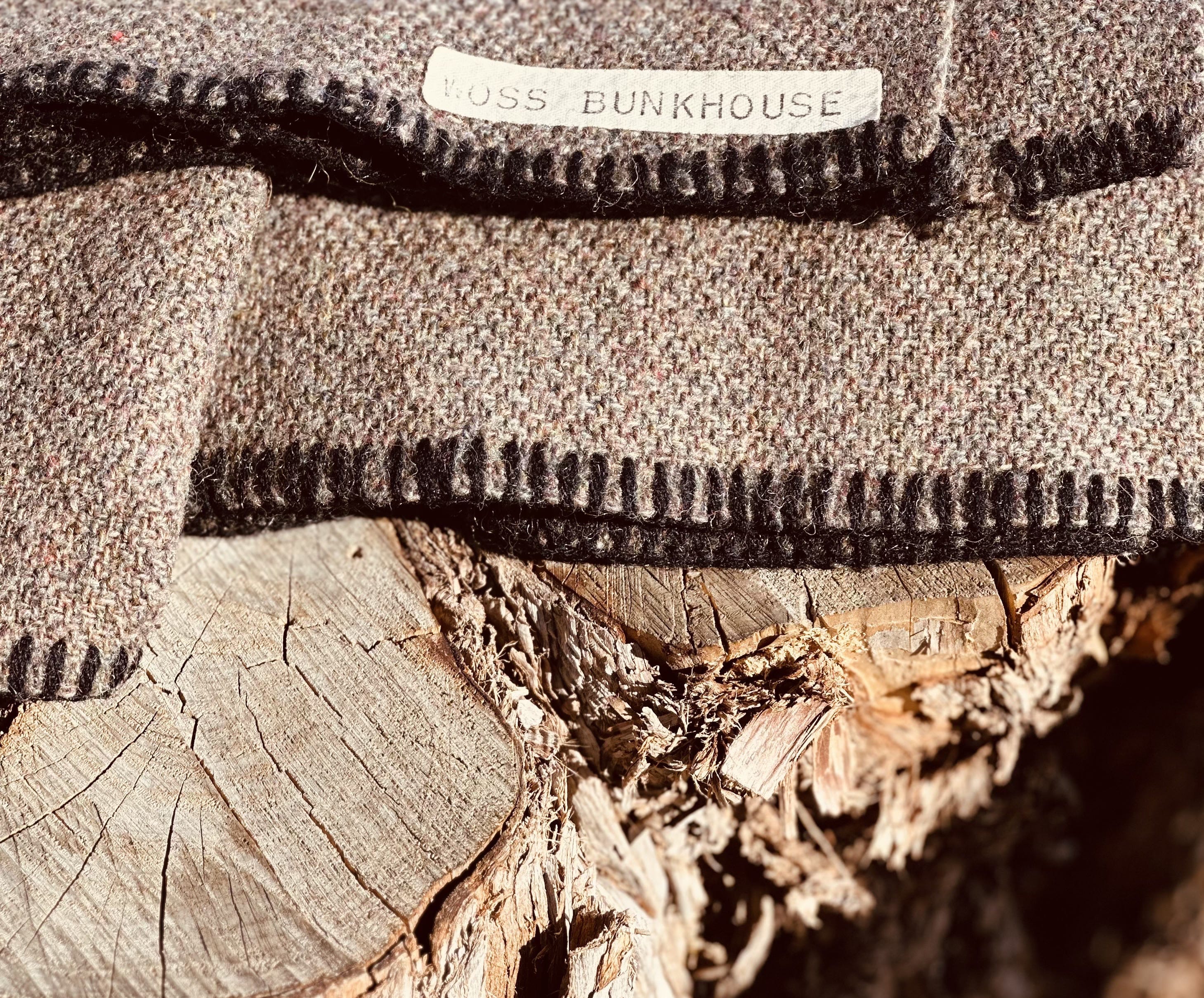
With my complimentary Woss Lake Bunkhouse wool blanket, Old Scratchy, tucked under my arm, I hit the road. I was carrying my guitar case and a duffel bag. My cork boots were tied together by the laces and hung over my shoulder. I stuck out a thumb and hitchhiked south to my first stop at Liz’s place in Comox, two hours away. Both of my sisters and their husbands, wherever they’ve lived, have always been happy to help me out with a place to stay and a free pass to the fridge. They’ve always looked out for their baby brother. Before too long, I was back in “the big smoke,” which is what the folks out in the boonies called a town or a city. It’s also North Island logging slang for Vancouver. It was one of many new phrases I was taught by my favorite logging hero John Shaw, the Riggin’ Slinger.

You’re a fantastic wordsmith, can I keep calling you Neal? This reminds me a bit of the series Landman - about riggers in TX oil fields. Billy Bob-can’t go wrong